





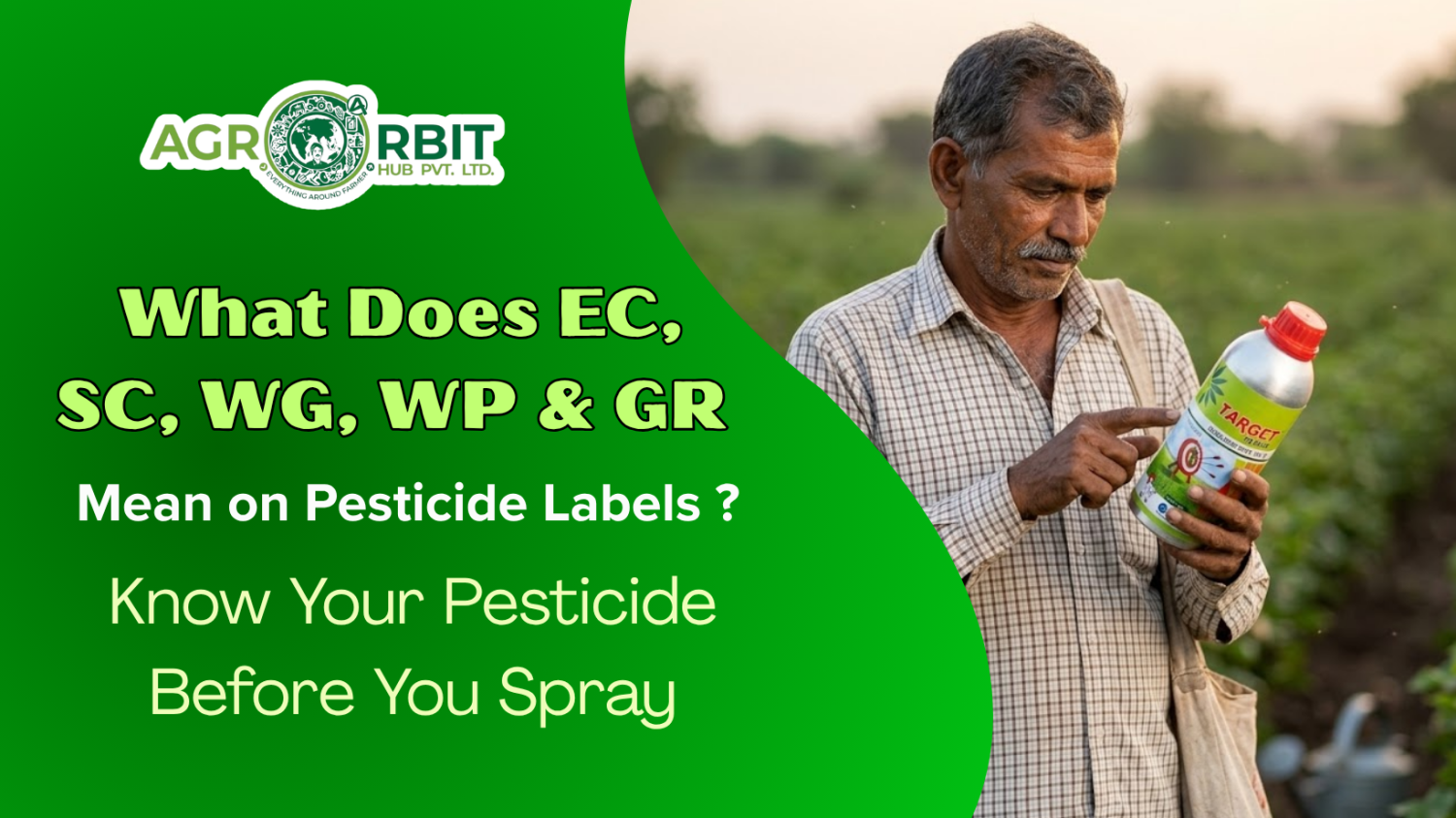
What Does EC, SC, WG, WP & GR Mean on Pesticide Labels?
Modern crop protection involves more than simply selecting a
pesticide. Understanding the information printed on a pesticide label is
equally important for making informed and responsible product-use decisions.
Among the most commonly seen terms are EC, SC, WG, WP, and GR—abbreviations
that describe the formulation in which the active ingredient is prepared.
Each formulation has different physical and handling
characteristics, which can influence how a product is mixed, applied, stored,
and managed. Knowing what these terms mean can help farmers,
agricultural professionals, retailers, and wholesalers interpret
pesticide labels more confidently and follow the recommended application
instructions.
What Is a Pesticide
Formulation?
A pesticide formulation is the finished form in
which an active ingredient is prepared for practical agricultural use.
The active ingredient is the chemical or biological
component responsible for controlling a pest, disease, or weed. However, the
active ingredient alone may not always be convenient or safe to apply directly.
Therefore, it is combined with other ingredients or
processed into a suitable formulation such as:
- Liquid
concentrates
- Suspensions
- Wettable
powders
- Water-dispersible
granules
- Granules
- Other
specialized formulations
The formulation can affect how the product is mixed,
applied, distributed, stored, and handled.
What Does
EC Mean on a Pesticide Label?
EC – Emulsifiable Concentrate
EC stands for Emulsifiable Concentrate.
An EC formulation is a concentrated liquid formulation that
is designed to be diluted with water before application.
When an EC product is mixed with water according to the
label instructions, it forms an emulsion, allowing the active
ingredient to be distributed through the spray mixture.
Key
characteristics of EC formulations
- Usually
available as a liquid concentrate
- Generally
diluted with water before spraying
- Produces
an emulsion after mixing
- Often
convenient for spray applications
- Requires
proper measuring and mixing
- Should
be handled according to the product label
What Does SC Mean on a
Pesticide Label?
SC – Suspension Concentrate
SC stands for Suspension Concentrate.
SC is a liquid formulation in which very fine particles of
the active ingredient are suspended in a liquid medium.
The product is normally diluted with water before spraying.
After dilution, the particles remain dispersed in the spray mixture.
Key
characteristics of SC formulations
- Liquid
formulation
- Contains
finely divided active ingredient particles
- Usually
diluted with water
- Requires
proper mixing
- The
suspension may settle during storage
- The
container may need adequate agitation before and during preparation, as
instructed on the label
What Does WG Mean on a
Pesticide Label?
WG – Water-Dispersible Granules
WG stands for Water-Dispersible Granules.
WG formulations are prepared as granules that disperse in
water to form a sprayable suspension.
Compared with traditional powder formulations, granules can
be more convenient to handle because they generally produce less dust during
measuring and mixing.
Key
characteristics of WG formulations
- Granular
formulation
- Designed
to disperse in water
- Usually
used for spray applications
- Generally
produces less dust than conventional powders
- Requires
proper mixing
- Should
be used according to the manufacturer's instructions
What Does WP Mean on a
Pesticide Label?
WP – Wettable Powder
WP stands for Wettable Powder.
WP formulations contain the active ingredient in powder form
along with other ingredients that allow the powder to become dispersed in
water.
The resulting mixture forms a suspension that can be applied
using suitable spraying equipment.
Key
characteristics of WP formulations
- Powder
formulation
- Mixed
with water before application
- Forms
a suspension
- Requires
thorough mixing
- May
generate dust during handling
- Appropriate
protective equipment and label precautions should be followed
What Does GR Mean on a
Pesticide Label?
GR – Granules
GR stands for Granules.
GR formulations are pesticide products prepared in a
granular form.
Depending on the specific product and its approved use,
granular pesticides may be applied directly to the soil, around plants, or in
another manner specified on the label.
Key
characteristics of GR formulations
- Solid
granular formulation
- Does
not normally require preparation as a conventional spray
- Application
method depends on the specific product
- Can
be useful for certain soil or crop applications
- Application
rate must be carefully followed
Does a Higher Percentage Always Mean a
Better Product?
Not necessarily.
The percentage of active ingredient is only one part of the
product information.
A product with a higher concentration may have a different
recommended application rate from a lower-concentration product.
For example, two products containing the same active
ingredient but different concentrations may require completely different
quantities per acre or hectare.
Therefore:
Never compare pesticide products only by the percentage
printed on the label.
Compare the complete label information, including active ingredient, formulation, recommended dose, crop, target pest, and application instructions.
How to Read a Pesticide Label
Correctly
Before using any pesticide,
carefully check the label.
Important information may
include:
1. Product Name
The commercial or brand name of
the pesticide.
2. Active Ingredient
The ingredient responsible for
the pesticide's intended biological action.
3. Concentration
The amount or concentration of
active ingredient in the formulation.
4. Formulation
This may appear as EC, SC, WG,
WP, GR, or another formulation code.
5. Target Crop
The crops for which the product
is approved or recommended.
6. Target Pest / Disease /
Weed
The pest, disease, or weed that
the product is intended to control.
7. Recommended Dose
The manufacturer's recommended
application quantity.
8. Dilution / Water Volume
Instructions regarding the
quantity of water or preparation method, where applicable.
9. Application Method
Information about spraying, soil
application, or other approved methods.
10. Safety Instructions
Precautions for handling, mixing, application,
storage, and disposal.
How Formulation and Spray
Equipment Work Together
Pesticide formulation and application equipment are closely
connected.
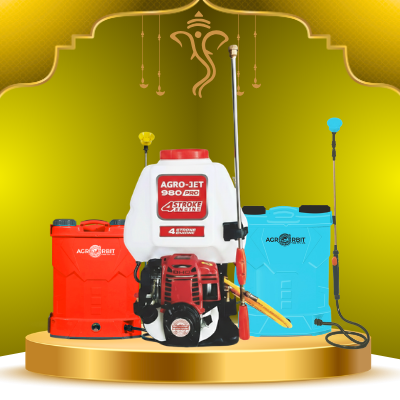
Sprayers should be appropriate for the product and
application method.
Important factors include:
- Nozzle
type
- Spray
pressure
- Droplet
size
- Water
volume
- Spray
pattern
- Equipment
calibration
- Tank
mixing procedure
- Sprayer
cleanliness
Proper calibration can help deliver the intended amount of
product uniformly across the target area.
Formulation Does Not Replace Label Instructions
One of the most important rules in pesticide use is:
The formulation code is only one part of the label.
For example, knowing that a product is 50% WG does
not tell you:
- Which
crop it can be used on
- Which
pest it controls
- How
much product to use
- How
much water to use
- When
to apply it
- How
many applications are permitted
- What
safety precautions are required
All of this information must come from the specific
product label and applicable regulatory directions.
Conclusion
Understanding pesticide formulation codes such as EC,
SC, WG, WP, and GR is an important part of reading and interpreting
crop protection product labels. These terms describe the physical formulation
of a pesticide and provide useful information about how the product is
prepared, handled, mixed, and applied.
However, the formulation type alone should never be the
basis for selecting or using a pesticide. Active ingredient, target
crop, target pest or disease, recommended dose, application method, safety
precautions, and label directions should always be considered before
use.
For farmers, retailers, wholesalers, and agricultural
professionals, having a clear understanding of pesticide formulations can
support more informed purchasing decisions and responsible product handling.
Read the label carefully, follow the recommended
instructions, and use crop protection products responsibly for effective and
sustainable agriculture.

AgroOrbit is known for supplying Fertilizers, Pesticides, Plant Growth Regulators and Equipment that are required in agriculture. We provide guaranteed market's best price and customer support. Our USP is Negotiation with us.
With customer satisfaction as the central idea of the business, AgroOrbit has become one of the leading and reliable sources of agricultural products and equipments.Our goal is providing the right products to our customers and farmers. we are also providing a platform to small retailers with the facility to became a seller.



Contact Info
- Address: Khasra No. 16/7, Street No 8, Swaroop Nagar, North Delhi, Delhi - 110042
- Phone: 1800 313 36899
- Email: Info@agroorbit.com