












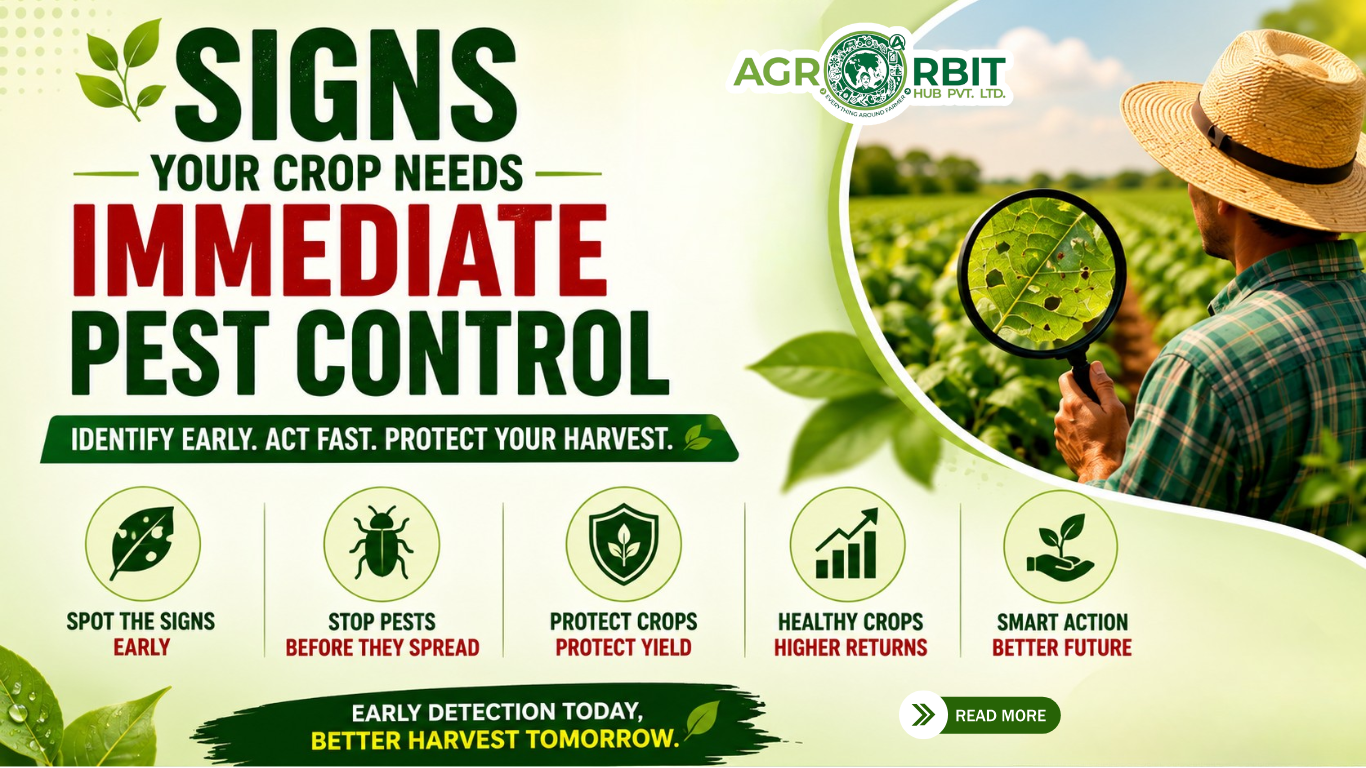
Signs Your Crop Needs Immediate Pest Control
Healthy crops are the foundation of profitable farming. But
pests can silently damage fields before farmers even realize there is a
problem. In many cases, a small pest attack can quickly turn into a major
infestation that reduces yield, lowers crop quality, and increases production
costs. Identifying the early warning signs of pest attacks is one of the most
important skills every farmer should develop.
In 2026, with changing weather patterns, rising
temperatures, and increasing resistance among pests, farmers must stay more
alert than ever. Early pest detection and timely crop protection can save both
the harvest and the farmer’s investment.
Why Early Pest Control Matters
Pests not only feed on crops but also weaken plants, spread
diseases, and reduce overall productivity. Delaying pest control can lead to:
- Lower
crop yield
- Poor
quality produce
- Increased
disease spread
- Higher
treatment costs later
- Financial
losses for farmers
Immediate action at the right stage helps prevent
large-scale damage and keeps crops healthy throughout the growing season.
Major Signs Your Crop Needs
Immediate Pest Control
1. Holes in Leaves or Chewed Edges
One of the earliest and most visible signs of pest attack is
damaged leaves. If you notice irregular holes, torn edges, or partially eaten
leaves, insects may already be feeding on the crop.
Common pests responsible:
- Caterpillars
- Beetles
- Grasshoppers
- Armyworms
Leaf damage reduces the plant’s ability to perform
photosynthesis, directly affecting crop growth and yield.
Immediate action:
Inspect the underside of leaves and nearby soil for insects
or larvae. Early spraying or biological pest control can stop further spread.
2. Yellowing or Curling Leaves
Leaves turning yellow or curling abnormally may indicate
sucking pests attacking the crop.
Common pests:
- Aphids
- Whiteflies
- Thrips
- Jassids
These insects suck plant sap, weakening crops and slowing
growth. They can also spread harmful viral diseases between plants.
Warning sign:
If yellowing appears in patches across the field, pest
infestation may already be spreading rapidly.
3. Sticky Substance on Leaves
A shiny or sticky layer on leaves is often caused by
honeydew secretion from sucking pests.
Usually caused by:
- Aphids
- Whiteflies
- Mealybugs
This sticky material attracts fungal growth called sooty
mold, which blocks sunlight and reduces photosynthesis.
Why immediate control is important:
Unchecked sucking pests multiply very quickly and can
destroy entire crop sections within days.
4. Wilting Plants Despite Proper Watering
If crops appear weak or wilted even after adequate
irrigation, root or stem pests could be damaging the plant internally.
Possible pests:
- Termites
- Root
grubs
- Stem
borers
These pests attack hidden plant parts, making detection
difficult until serious damage occurs.
What farmers should do:
Check roots and stems carefully for holes, tunnels, or
insects inside plant tissues.
5. Presence of Insects Around the Crop
Large numbers of insects flying or crawling near crops
should never be ignored.
Examples:
- Whiteflies
flying when plants are disturbed
- Moths
active during evening hours
- Ants
moving continuously on stems
Ants often indicate aphids or mealybugs nearby because they
feed on honeydew produced by these pests.
Important tip:
Regular field scouting helps identify pest populations
before economic damage begins.
6. Stunted Plant Growth
If some plants remain smaller than others or stop growing
properly, hidden pest activity may be affecting roots or nutrient flow.
Common causes:
- Nematodes
- Root-feeding
insects
- Sap-sucking
pests
Stunted crops usually produce lower yields and weaker fruits
or grains.
7. Spots, Discoloration, or Burn Marks on Leaves
Pests often leave feeding marks that appear as:
- Brown
spots
- Silver
streaks
- Burn-like
patches
- Tiny
puncture marks
Thrips and mites are especially known for causing such
symptoms.
Why it matters:
Damaged leaves weaken plant immunity and increase disease
vulnerability.
8. Damaged Fruits, Flowers, or Pods
Pests attacking reproductive parts of the plant can directly
reduce marketable yield.
Warning signs:
- Holes
in fruits
- Premature
flower dropping
- Damaged
pods or grains
- Rotten
spots developing early
Common culprits:
- Fruit
borers
- Pod
borers
- Fruit
flies
Immediate pest management is necessary to avoid severe
economic losses.
9. Sudden Increase in Weed or Pest Activity After
Weather Changes
Warm temperatures and high humidity often create ideal
conditions for pest outbreaks.
High-risk periods:
- After
rainfall
- During
humid weather
- Seasonal
temperature shifts
Farmers should increase crop monitoring during these periods
because pests reproduce faster in favorable conditions.
10. Visible Eggs or Larvae on Plants
Finding insect eggs or larvae is a strong indication that a
larger infestation is coming soon.
Common locations:
- Underside
of leaves
- Stem
joints
- Soil
surface near roots
Removing eggs early can prevent future pest explosions.
Best Practices for Immediate Pest Management
Regular Field Monitoring
Inspect crops at least 2–3 times weekly to identify early
signs.
Use Recommended Crop Protection Products
Choose the correct insecticide, fungicide, or biologicalsolution based on the pest type.
Use proper insecticides along with plant growth stimulants and fertilizers.
Follow Integrated Pest Management (IPM)
Combine:
- Biological
control
- Cultural
practices
- Safe
chemical applications
- Monitoring
systems
Maintain Proper Field Hygiene
Remove infected plants, weeds, and crop residues regularly.
Final Thoughts
Pests can spread faster than many farmers expect. Ignoring
early warning signs often leads to major crop damage and financial losses.
Timely observation, proper diagnosis, and immediate pest control are essential
for maintaining healthy crops and achieving better yields.
Modern farming is no longer just about planting and
harvesting—it is about smart monitoring, fast action, and protecting crops at
every stage. Farmers who recognize pest problems early are better prepared to
safeguard both productivity and profits.
Healthy crops begin with timely protection.

AgroOrbit is known for supplying Fertilizers, Pesticides, Plant Growth Regulators and Equipment that are required in agriculture. We provide guaranteed market's best price and customer support. Our USP is Negotiation with us.
With customer satisfaction as the central idea of the business, AgroOrbit has become one of the leading and reliable sources of agricultural products and equipments.Our goal is providing the right products to our customers and farmers. we are also providing a platform to small retailers with the facility to became a seller.



Contact Info
- Address: Khasra No. 16/7, Street No 8, Swaroop Nagar, North Delhi, Delhi - 110042
- Phone: 1800 313 36899
- Email: Info@agroorbit.com