











How Rain and Humidity Affect Insect Pest Populations
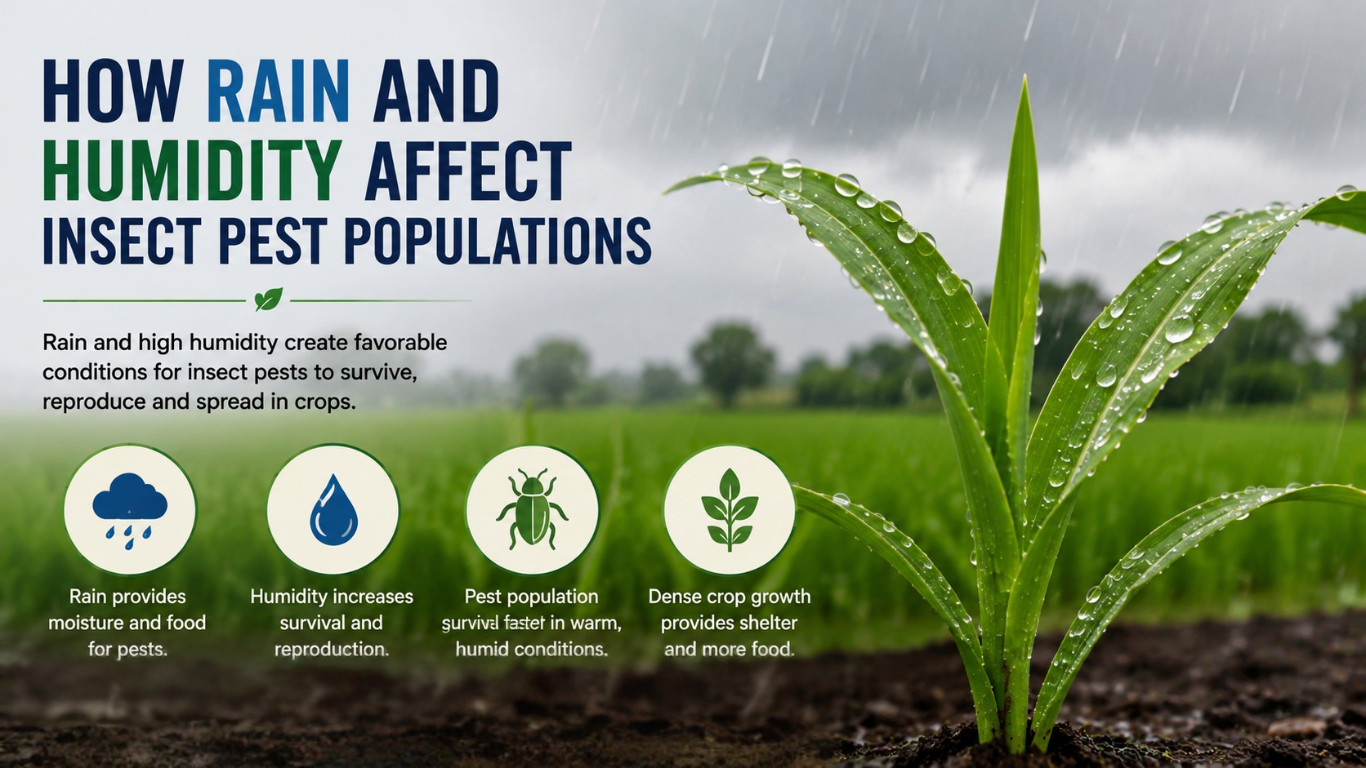
Rainfall and humidity are among the most important
environmental factors influencing insect pest populations in agricultural
crops. During the monsoon season, changes in rainfall patterns, temperature,
moisture levels and relative humidity can significantly affect how quickly
insect pests reproduce, survive, feed and spread from one plant to another.
While some weather conditions may naturally reduce certain insect populations,
others can create highly favourable conditions for pests to multiply rapidly
and cause serious crop damage.
Rainfall and humidity play an important role in the
development, survival and spread of insect pests in agricultural crops. During
the monsoon season, increased moisture, moderate temperatures and rapid crop
growth can create favourable conditions for many pests. Crops such as paddy,
cotton, maize, soybean, pulses and vegetables may experience changing pest
activity depending on rainfall intensity, humidity, temperature and crop growth
stage.
While heavy rainfall can sometimes wash away exposed insects, eggs and larvae, it does not always eliminate pest problems. Many insects remain protected inside leaf folds, stems, maize whorls, flowers, pods, fruits and dense crop canopies. Once rainfall decreases and warm, humid conditions return, surviving pest populations may become active again.
How Rainfall Affects Insect Pests
Light to moderate rainfall can support healthy and rapid
crop growth, producing fresh leaves and tender shoots that may provide
favourable feeding sites for several insect pests. High humidity can also
improve the survival of certain pests and support faster population development
under suitable temperatures.
On the other hand, heavy rainfall may temporarily reduce
populations of small insects present on exposed plant surfaces. However, pests
hiding inside protected areas of the crop may survive. Therefore, farmers
should inspect their fields after prolonged rainfall rather than assuming that
rain has solved the pest problem.
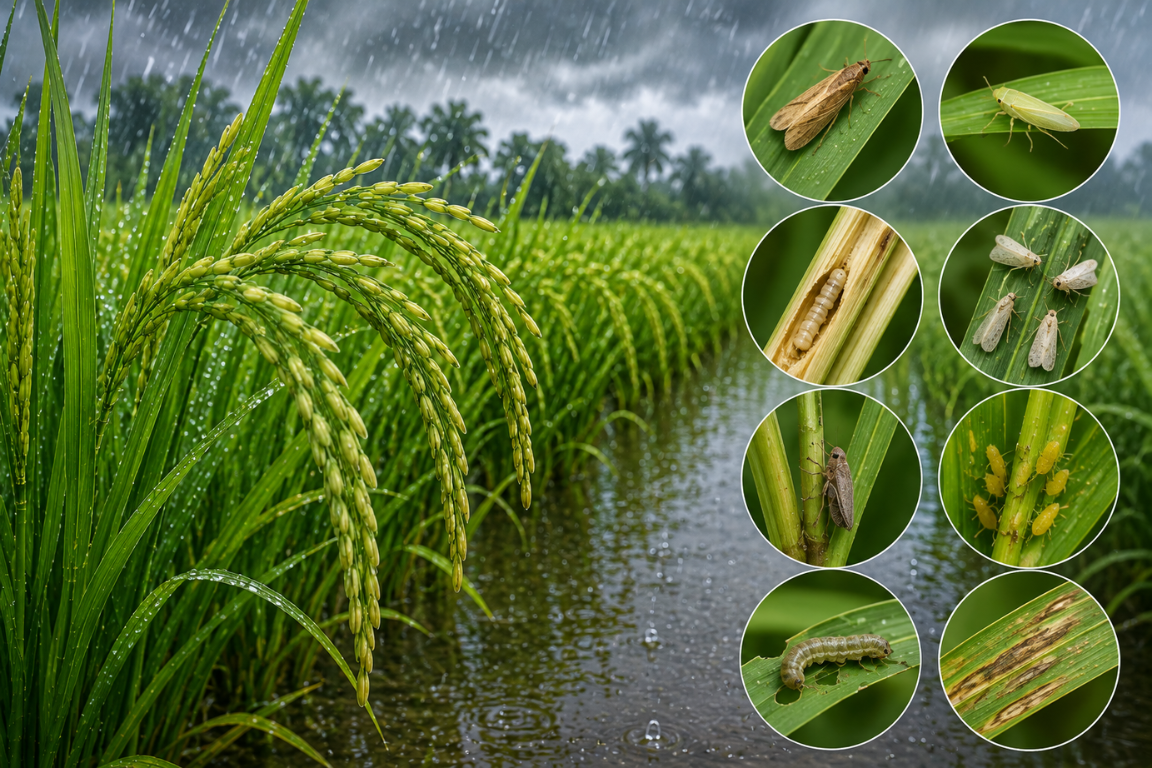
1. Paddy Crops
During the monsoon season, paddy crops may face pest
problems from stem borers, leaf folders and planthoppers. Dense crop
growth and changing moisture conditions can make pest monitoring difficult.
Useful active ingredients may include:
These products should only be selected when they are registered and recommended for the specific pest and crop.
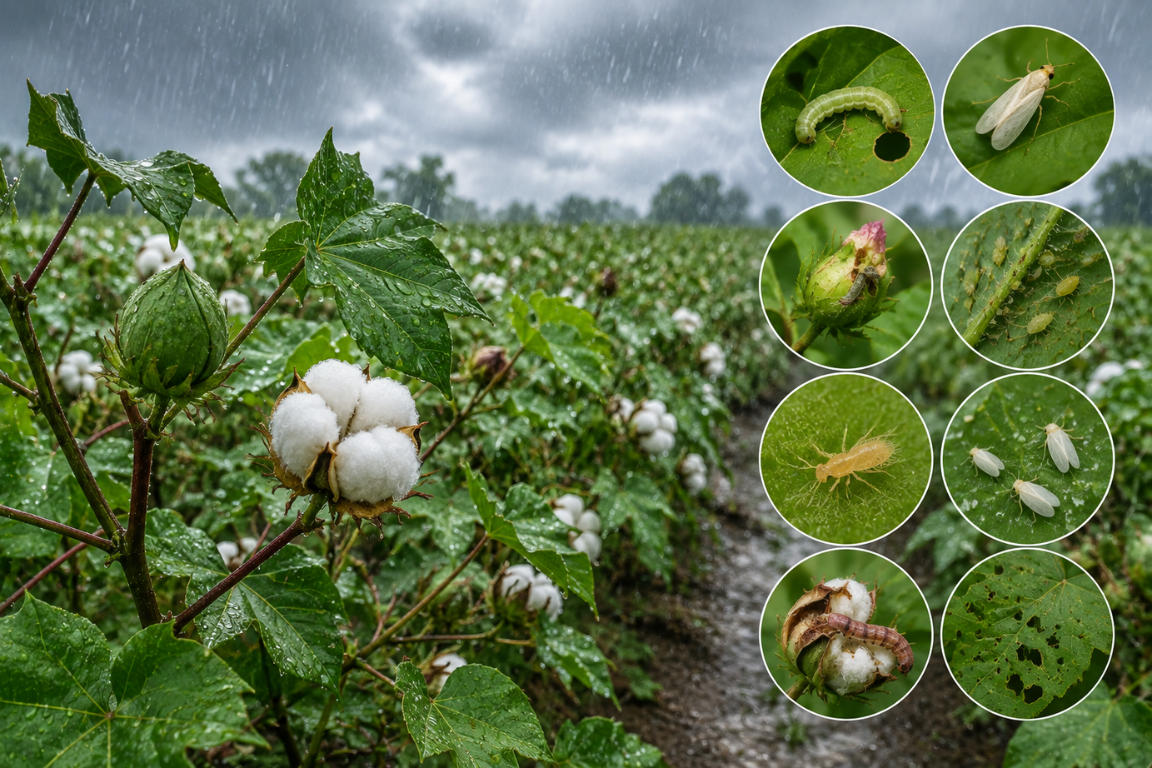
2. Cotton Crops
Cotton may be affected by aphids, jassids, whiteflies,
thrips and bollworms. Rainfall may temporarily reduce some exposed sucking
pests, but fresh vegetative growth and favourable humidity can support renewed
pest activity.
Useful active ingredients may include:
Sucking pests and caterpillar pests require different management approaches, so correct pest identification is essential.
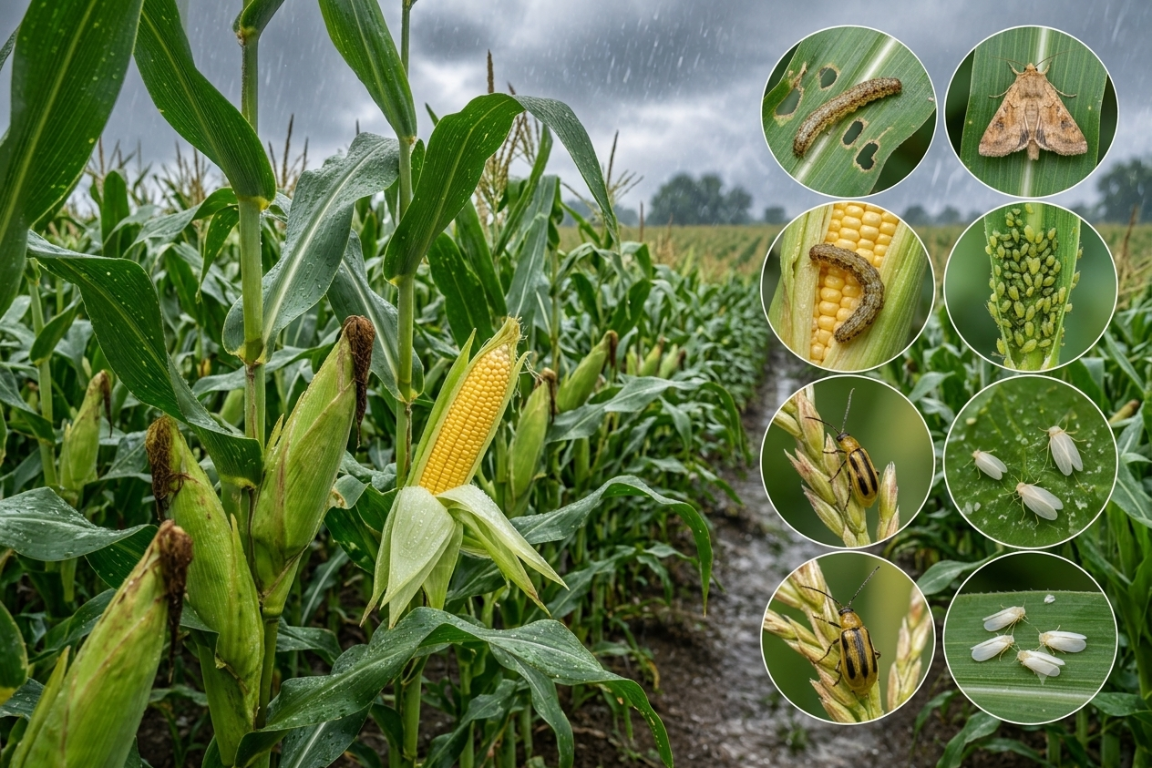
3. Maize Crops
Maize grown during the Kharif and monsoon season can be
affected by fall armyworm and stem borers. Caterpillars hiding inside
the maize whorl or stem may be protected from direct rainfall.
Useful active ingredients may include:
- Chlorantraniliprole
- Emamectin
Benzoate
- Spinetoram
Regular inspection of the maize whorl can help identify early caterpillar damage.
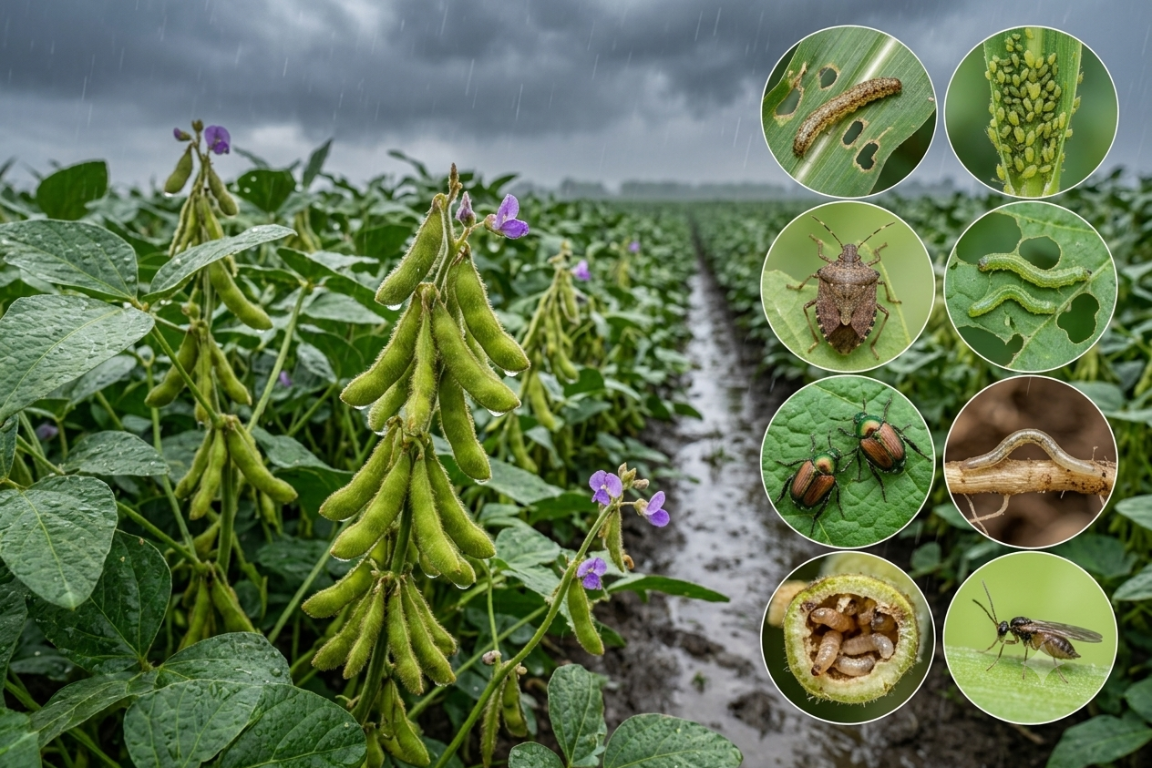
4. Soybean Crops
Soybean crops may experience pest problems from leaf-feeding
caterpillars, girdle beetles and sucking pests. High rainfall can promote
dense crop growth, making it important to inspect plants carefully.
Useful active ingredients may include:
- Indoxacarb
- Emamectin
Benzoate
- Chlorantraniliprole
Product selection should depend on the specific pest identified in the soybean field.
5. Pulses
Pulses such as pigeon pea, mung bean and black gram
can be affected by sucking pests, caterpillars and pod-feeding insects. Damage
during flowering and pod development can directly affect crop production.
Useful active ingredients may include:
- Emamectin
Benzoate
- Spinosad
- Flonicamid
Monitoring flowers and developing pods is especially
important during periods of favourable pest activity.
6. Vegetable Crops
Vegetables such as tomato, chilli, brinjal, okra and
cucurbits can be affected by aphids, whiteflies, thrips and various
caterpillar pests. High humidity and continuous crop growth can create
favourable conditions for repeated pest infestations.
Useful active ingredients may include:
- Flonicamid
- Acetamiprid
- Spinosad
- Emamectin
Benzoate
- Chlorantraniliprole
Different vegetable crops have different approved pest
management recommendations, so the product label should always be checked
before use.
Important Monsoon Pest Management Tips
During the rainy season, farmers should:
- Regularly
inspect crops after rainfall.
- Check
the underside of leaves, tender shoots, stems, flowers and developing
fruits or pods.
- Identify
the pest before selecting a pesticide.
- Avoid
spraying when heavy rainfall is expected immediately.
- Follow
the product label for the correct crop, target pest, dosage and
application method.
- Use
recommended protective equipment during pesticide handling and
application.
- Rotate
suitable insecticide modes of action to help reduce resistance pressure.
- Combine
chemical control with monitoring, field sanitation and other Integrated
Pest Management (IPM) practices.
Conclusion
Rain and humidity can either suppress or encourage insect
pest populations depending on the crop, pest species and weather conditions.
Heavy rainfall may temporarily wash away some exposed insects, but high
humidity, favourable temperatures and dense crop growth can support the
survival and multiplication of other pests.
For effective crop protection, farmers should regularly
monitor paddy, cotton, maize, soybean, pulses and vegetable crops,
identify the exact pest and select only a pesticide that is appropriate and
registered for that particular crop and pest. Timely monitoring and responsible
pest management can help reduce crop damage during the monsoon season.

AgroOrbit is known for supplying Fertilizers, Pesticides, Plant Growth Regulators and Equipment that are required in agriculture. We provide guaranteed market's best price and customer support. Our USP is Negotiation with us.
With customer satisfaction as the central idea of the business, AgroOrbit has become one of the leading and reliable sources of agricultural products and equipments.Our goal is providing the right products to our customers and farmers. we are also providing a platform to small retailers with the facility to became a seller.



Contact Info
- Address: Khasra No. 16/7, Street No 8, Swaroop Nagar, North Delhi, Delhi - 110042
- Phone: 1800 313 36899
- Email: Info@agroorbit.com