





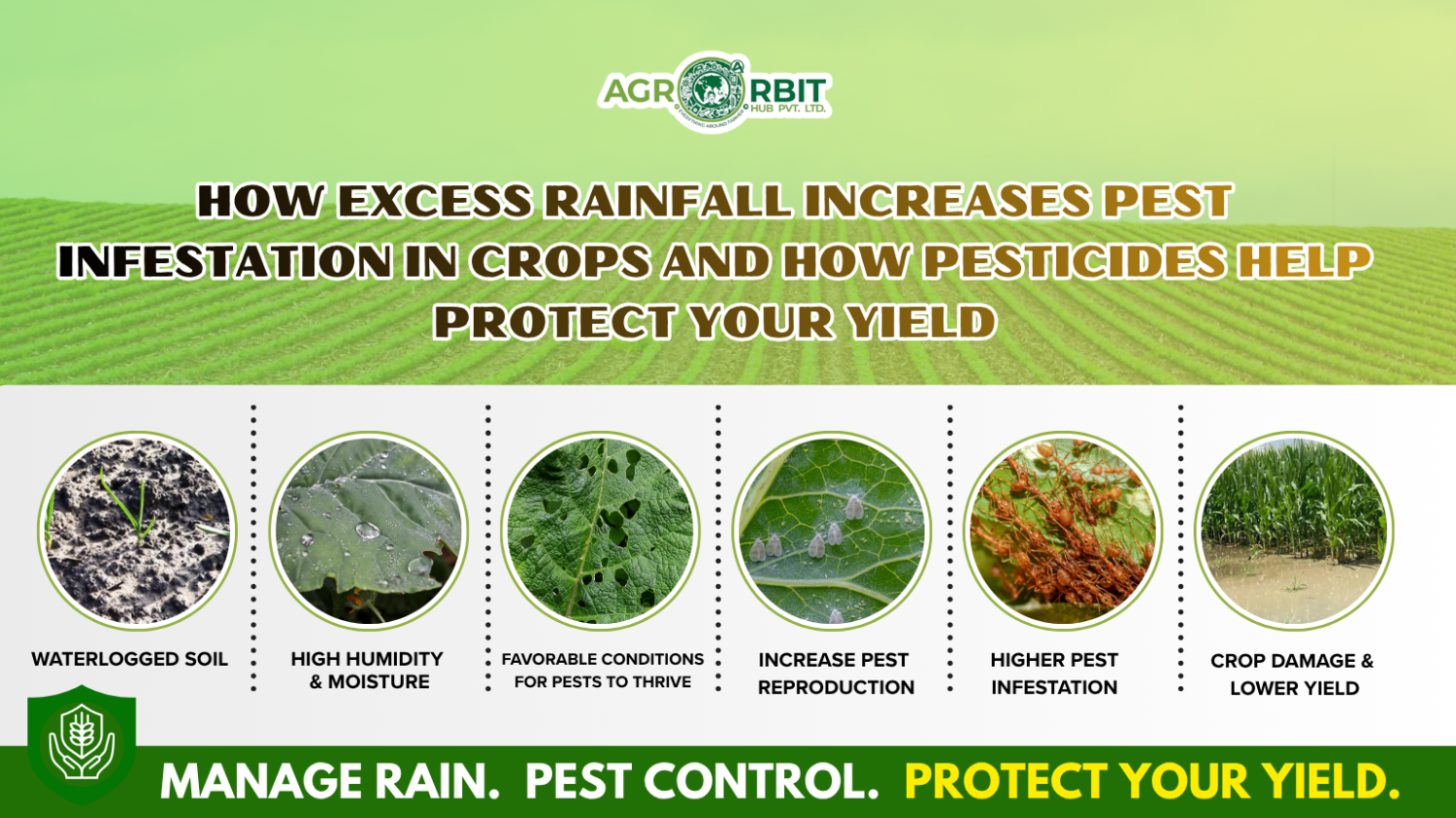
How Excess Rainfall Increases Pest Infestation in Crops and How Pesticides Help Protect Your Yield
INTRODUCTION
The monsoon
season is vital for agriculture, providing the water necessary for crop growth
and development. However, excessive rainfall can create favorable conditions
for the rapid spread of insects, fungal diseases, bacteria, and weeds. High
humidity, waterlogged soils, and dense crop canopies often lead to severe pest
infestations, causing significant yield losses and affecting crop quality.
According to agricultural experts, pests and diseases can reduce crop productivity by 20–40% if not managed effectively. Therefore, timely crop protection measures, including the judicious use of pesticides, play a crucial role in safeguarding crops during the rainy season.
Why Does Excess Rainfall Increase Pest Infestation?
1.High
Humidity Encourages Disease Development
Heavy
rainfall increases moisture levels and relative humidity, creating ideal
conditions for fungal pathogens to multiply rapidly.
Common
Diseases During Monsoon
|
Crop |
Major
Diseases |
|
Paddy |
Blast,
Sheath Blight, Brown Spot |
|
Soybean |
Rust,
Anthracnose |
|
Cotton |
Alternaria
Leaf Spot |
|
Maize |
Turcicum
Leaf Blight |
|
Vegetables |
Downy
Mildew, Powdery Mildew, Leaf Spot |
|
Groundnut |
Tikka
Disease, Rust |
Fungal
spores spread quickly through rain splashes and wind, infecting healthy plants
and causing severe damage.
2. Warm
and Moist Conditions Favor Insect Multiplication
Excess
rainfall and moderate temperatures accelerate the life cycle of many insect
pests.
Major
Insect Pests During the Rainy Season
Paddy
- Stem Borer
- Leaf Folder
- Brown Planthopper
Soybean
- Stem Fly
- Tobacco Caterpillar
- Girdle Beetle
Cotton
- Whitefly
- Thrips
- Aphids
- Pink Bollworm
Maize
- Fall Armyworm
- Stem Borer
Vegetables
- Fruit Borer
- Whitefly
- Jassids
These
insects feed on leaves, stems, flowers, and fruits, reducing photosynthesis and
crop productivity.
3.
Waterlogging Weakens Plant Immunity
Continuous
rainfall often causes:
- Poor root aeration
- Nutrient leaching
- Reduced nutrient uptake
- Stunted growth
Weak plants
become more vulnerable to pests and diseases.
4.
Excessive Weed Growth
Weeds
flourish during the rainy season and compete with crops for:
- Water
- Nutrients
- Sunlight
- Space
Many weeds
also act as alternate hosts for insects and disease-causing organisms.
Economic
Impact of Pest Infestation
Uncontrolled
pest attacks may result in:
Yield
Losses
Crop losses
can range between 15% and 50%.
Reduced
Market Value
Diseased or
damaged produce often fetches lower prices.
Increased
Production Costs
Farmers may
need repeated sprays and additional labor.
Lower
Profitability
Reduced yields directly affect farmers' income.
From seed to harvest, effective crop protection ensures that excessive rainfall becomes a source of growth rather than a cause of crop losses.
Impact of Waterlogging and
Plant Stress
Heavy
rainfall often causes waterlogging in fields, which adversely affects root
growth and nutrient absorption. When roots remain submerged for extended
periods, oxygen availability decreases, weakening the plants and reducing their
natural defense mechanisms. Nutrients such as nitrogen and potassium may also
be lost through leaching, resulting in nutrient deficiencies and poor crop
vigor.
Weak and
stressed plants are more susceptible to attacks by insects and diseases. They
are unable to recover quickly from damage and often exhibit symptoms such as
yellowing leaves, stunted growth, wilting, and poor flowering. Consequently,
excessive rainfall indirectly contributes to higher pest incidence by reducing
the overall health and resistance of crops.
Integrated Pest Management for
Sustainable Agriculture
Although
pesticides are essential tools for crop protection, their use should be
integrated with other management practices to ensure sustainability. Integrated
Pest Management (IPM) combines cultural, biological, and chemical methods to
manage pests effectively while minimizing environmental impacts.
Practices
such as crop rotation, balanced fertilizer application, proper field drainage,
removal of infected plant residues, use of resistant crop varieties, and
biological control agents can significantly reduce pest pressure. Pesticides
should be used only when necessary and in recommended doses to prevent
resistance development and preserve beneficial insects.
Conclusion
Excess
rainfall during the monsoon season creates ideal conditions for pests,
diseases, and weeds, posing a major threat to agricultural productivity. Timely
and judicious use of insecticides, fungicides, and herbicides, combined with
Integrated Pest Management practices, helps farmers protect their crops and
minimize losses.
Effective
crop protection not only ensures higher yields and better-quality produce but
also improves farm profitability and contributes to food security. By adopting
preventive measures and using pesticides responsibly, farmers can successfully
overcome monsoon-related challenges and achieve sustainable agricultural
growth.

AgroOrbit is known for supplying Fertilizers, Pesticides, Plant Growth Regulators and Equipment that are required in agriculture. We provide guaranteed market's best price and customer support. Our USP is Negotiation with us.
With customer satisfaction as the central idea of the business, AgroOrbit has become one of the leading and reliable sources of agricultural products and equipments.Our goal is providing the right products to our customers and farmers. we are also providing a platform to small retailers with the facility to became a seller.



Contact Info
- Address: Khasra No. 16/7, Street No 8, Swaroop Nagar, North Delhi, Delhi - 110042
- Phone: 1800 313 36899
- Email: Info@agroorbit.com