






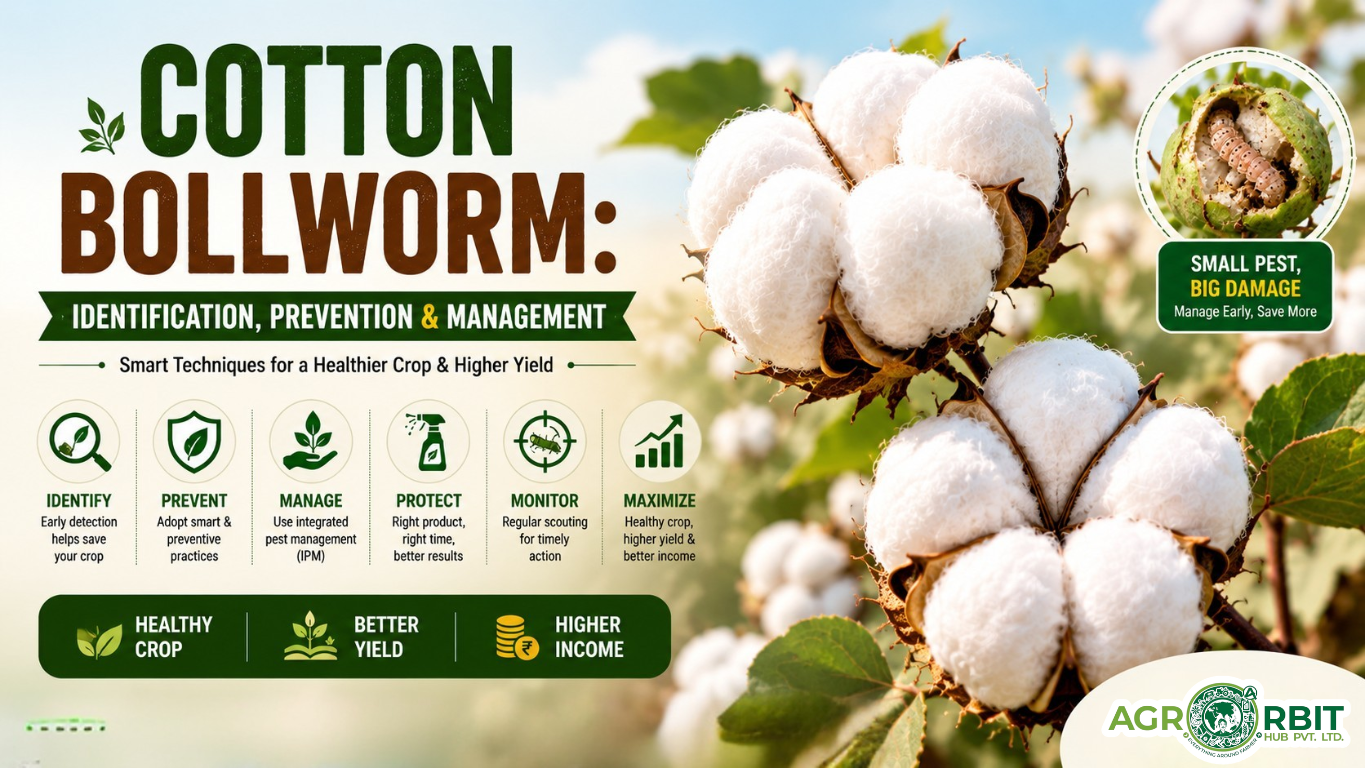
Cotton Bollworm: Identification, Prevention & Management
Introduction
Cotton
bollworms are among the most important insect pests affecting cotton
production. They can attack reproductive parts of the crop, including squares,
flowers and developing bolls, potentially causing direct yield and quality
losses.
Among the
major bollworms associated with cotton are Pink Bollworm (Pectinophora
gossypiella), American Bollworm (Helicoverpa armigera) and Spotted
Bollworm (Earias spp.).
Effective management should focus on early detection, regular monitoring, integrated pest management (IPM), conservation of beneficial insects, and need-based pesticide use.
What
Is Cotton Bollworm?
Cotton
bollworms are caterpillar pests that feed on different parts of the cotton
plant. Depending on the species and crop stage, larvae may attack tender
shoots, squares, flowers, and bolls.
Once larvae
enter developing bolls, controlling them can become more difficult because they
are partially protected inside the plant tissue. Therefore, early monitoring
is a critical component of bollworm management.
Major
Types of Bollworms in Cotton
Pink
Bollworm
Pink
bollworm is one of the most important pests of cotton in India. Its larvae
primarily damage flowers and developing bolls.
ICAR-NCIPM
identifies pink bollworm as a major cotton pest and has developed IPM
technology specifically focused on its management.
American
Bollworm
The American bollworm, Helicoverpa armigera, has a broad host range and can attack
cotton reproductive structures. Larvae may feed on squares, flowers and bolls.
Spotted
Bollworm
Spotted
bollworms, including Earias species, can damage shoots, square and
bolls. Early-stage infestations should be monitored carefully to prevent the
pest from becoming established.
Symptoms of Bollworm Infestation
Common
symptoms may include:
Damaged
Squares
Infested
squares may show feeding damage and may subsequently shed.
Damaged
Flowers
Larvae may
feed on flowers and reproductive structures.
Boll
Damage
Small holes
or feeding damage may appear on developing bolls.
Premature
Boll Opening
Infested
bolls may open abnormally and produce poor-quality cotton.
Reduced
Cotton Quality
Severe
infestation can affect lint quality and marketable yield.
How
Bollworms Damage Cotton
Bollworms
can damage cotton at critical reproductive stages. Feeding on squares and
flowers can reduce the number of productive sites, while feeding inside
developing bolls can directly affect cotton lint and seed development.
This is why pest monitoring should continue throughout flowering and boll-development stages.
When
Is Cotton Most Vulnerable?
Bollworm
management becomes particularly important during:
- Flowering
- Square formation
- Boll formation
- Boll development
Recommended Technicals for Cotton Bollworm Management
1.Spinetoram 11.7% SC
Spinetoram 11.7% SC is a broad-spectrum insecticide used against several chewing and sucking insect pests. In cotton, the Government of India’s pesticide-use information lists it for thrips, tobacco caterpillar and spotted bollworms.
How It
Works
Spinetoram belongs to the spinosyn group of insecticides. It acts through contact and ingestion, affecting the insect nervous system and causing rapid cessation of feeding followed by paralysis and death.
Delegate– Spinetoram 11.7% SC
Delegate contains Spinetoram 11.7% SC
and can be highlighted for cotton pest management, particularly where the
target pest and current product label permit its use.
Spinetoram
belongs to a different insecticide group from Emamectin Benzoate, making mode-of-action
consideration important when developing a resistance-management program.
2.Emamectin Benzoate 5% SG
Emamectin
Benzoate 5% SG is an
insecticide widely used for managing caterpillar and bollworm pests. In
India, the official pesticide-use information lists the 5% SG formulation for bollworms
in cotton, with a recommended use of 9.5–11.0 g a.i./ha and a 500 L spray
volume in that government reference.
Use in Cotton
Emamectin Benzoate 5% SG is used for the management of bollworms in cotton. It is a caterpillar-targeting insecticide that can be incorporated into a need-based integrated pest-management program. Farmers should identify the target pest before application and follow the current product label for dosage, timing, and application instructions.
How It Works
Emamectin
Benzoate belongs to the avermectin group of insecticides and primarily
acts on the insect nervous system. After exposure, susceptible larvae rapidly
stop feeding, followed by paralysis and mortality.
Current – Emamectin Benzoate 5% SG
Current contains Emamectin Benzoate 5% SG, an insecticide technically used for the management of caterpillar pests. It can be featured in the cotton bollworm section because emamectin benzoate is used in cotton pest-management programs for bollworm situations.
Cotton
bollworm management requires more than simply applying an insecticide. Early
identification, regular field scouting, pheromone-trap monitoring, proper crop
management and integrated pest management (IPM) can help farmers detect
bollworm infestations before they cause serious crop damage.
Insecticides containing technicals such as Emamectin Benzoate 5% SG and Spinetoram 11.7% SC can be considered for specific labeled pest situations, while combination products such as Profenofos + Fenpropathrin may have a role where the applicable label permits their use. The right product should always be selected according to the target pest, crop stage, infestation level and current registered label claim.

AgroOrbit is known for supplying Fertilizers, Pesticides, Plant Growth Regulators and Equipment that are required in agriculture. We provide guaranteed market's best price and customer support. Our USP is Negotiation with us.
With customer satisfaction as the central idea of the business, AgroOrbit has become one of the leading and reliable sources of agricultural products and equipments.Our goal is providing the right products to our customers and farmers. we are also providing a platform to small retailers with the facility to became a seller.



Contact Info
- Address: Khasra No. 16/7, Street No 8, Swaroop Nagar, North Delhi, Delhi - 110042
- Phone: 1800 313 36899
- Email: Info@agroorbit.com